Over the years, we have conducted many successful research projects throughout the world. Please read about our past projects, our current work, and our vision for the future.

Blending Humanitarian Care With Scientific Investigation
A medical research organization affiliated with the Women's Health Institute of the Cleveland Clinic
Our Work
Chinese Multi-center Screening Trial that will take place in five sites in China, which are 1) Beijing, 2) Shanghai, 3) Shijiazhuang, Hebei Province, 4) Wuhan, Hubei Province, and 5) Wushen County, Erdose, Inner Mongolia. The primary objective of the project will be to evaluate the Cobas 4800 HPV Assay, the …
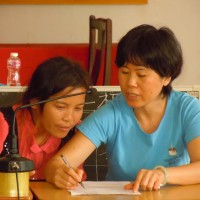
CHICAPS (Chinese Cervical Cancer Prevention Study) Over the past several years the focus of cervical cancer screening programs designed for mass screening and able to reach the underserved, have ranged from complex infrastructure demanding cytology (Pap) based efforts, to very low tech unaided visual inspection programs (using 5% acetic acid). …
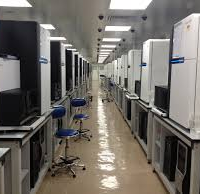
With great progress in HPV assay development over the past 5-7 years, and especially PCR based assays, BGI Shenzhen (the world’s largest genomic sequencing facility) asked the question if sequencing technology can move the science and the POI screening paradigm even further. With the new bench-top next generation sequencing instruments …

The Peru Cervical Cancer Prevention Study PERCAPS was a 2 Phase pilot project funded through the Merck Investigator Initiated Studies Program. It represented the first project for POI in our new community based screening initiative. After years of technology based studies, we believed the important elements of screening technologies were …
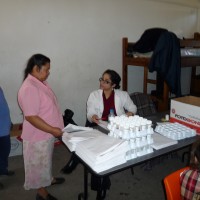
MEXICAN CERVICAL CANCER SCREENING STUDY II This project took place in the State of Michoacán Mexico. Enrollment was conduced from December 2008 through March of 2009. Approximately 2500 women took part in the study. The primary objective of this study is to design a cost-effective, highly sensitive and highly specific …

SHENCCAST I (The Shenzhen cervical cancer screening program I) was initiated as a collaborative effort between the provincial government of Guangdong, Shenzhen University Peking University Hospital and private donors. The goal was to provide cervical cancer screening to women in the Southern Chinese province of Guangdong who had not been …
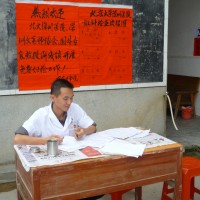
SHENZHEN CERVICAL CANCER SCREENING PROGRAM – II Between April, 2009 and April, 2010, a multi-site, a 10,000 women population-based cross-sectional study (The Shenzhen Cervical Cancer Screening Trial II (SHENCCAST II) was carried out in seven sites in Guangdong Province China, to evaluate a new self-sampling device POI self sampler, a …

Shenzhen Cervical Cancer Screening Trial III Using the residual stored DNA from the Cervista High Risk HPV assay used in SHENCCAST II, we tested the SHENCCAST II dataset (noted above) with the new Cervista 16/18 HPV assay. These data was presented at Eurogin 2011, Lisbon, Portugal and published by Wu …
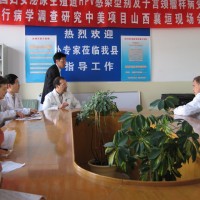
Our original work in China was a cross-sectional comparative trial that, for the first time, directly measured sensitivity and specificity of five cervical cancer screening technologies. In October of 1998 we conducted a pilot study in Xiangyuan and Yangcheng Counties in Southwest Shanxi Province, Peoples Republic of China. We demonstrated a …
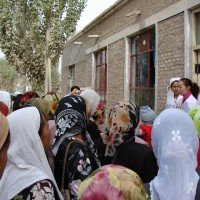
A population-based study of women, aged 16 to 54 years, was conducted in 3 rural ( Xinjiang , Shanxi, and Henan) and 2 urban areas ( Beijing and Shanghai) from July 2006 to April 2007 . Over 4200 women and girls were screened. The objectives were 1) to determine the …